‘Black Mirror’s “White Christmas” is No Longer Fiction: Eleven Years Later, Its Chilling Tech Is Real
December 29, 2025Black Mirror’s “White Christmas” episode, first aired in 2014, predicted technologies like augmented reality glasses, digital AI clones, online blocking, and virtual imprisonment that have now become real or are close to realisation, demonstrating the show’s prescience on issues surrounding AI, AR, and social tech.
In December 2014, Channel 4 and Netflix released “White Christmas” as a special episode of Black Mirror, written by Charlie Brooker and starring Jon Hamm and Rafe Spall. The episode stands out as one of the series’ most impactful stories, and nearly eleven years on, its dystopian technology is emerging in the real world. The core technologies depicted in the episode are:
- Z-Eyes (Augmented Reality): Heads-up augmented reality devices
- Cookies (Digital Clones/AI): Digital copies of consciousness functioning as AI assistants
- Blocking: The ability to socially “block” people, making them invisible and muted to one another
- Digital Imprisonment: Psychological and temporal imprisonment within virtual spaces
Today, we’re approaching each of these elements in tangible ways. For instance, consumer technology already includes AR headwear: Meta Ray-Bans let users live-stream their own point of view in real time, and smart glasses employ contextual AI coaching. While we aren’t implanting Z-Eyes, the commercial adoption of augmented reality is accelerating.
“Generative AI services also allow us to create digital clones of ourselves, just like the cookies in the Black Mirror episode. Our AI clones are not sentient, but we are increasingly delegating our ‘will’ to AI systems to enhance productivity.” (Source: Screen Rant)
Digital clones, akin to Black Mirror’s Cookies, are now real, with AI chatbots trained on an individual’s data to mimic tone, language, and even decision-making. Though these AIs are not sentient, companies increasingly entrust them with scheduling, communication, and automation, echoing the moral quandaries posed in the episode.
“Blocking” is another prescient concept. The episode visualises a future where a person can permanently “block” someone, rendering them as a faceless, incomprehensible silhouette. Today, blocking on social media platforms can entirely remove a person from our online lives, which often translates to genuine social isolation, as so much interaction occurs digitally.
The show’s prediction of digital imprisonment is also inching closer to reality, with companies like Neuralink and Synchron developing brain-computer interfaces and governments experimenting with surveillance-based e-carceration. In parallel with this are ongoing debates about ethics, privacy, and the psychological impact of extended virtual confinement.
The Enduring Relevance of Black Mirror’s Social Satire
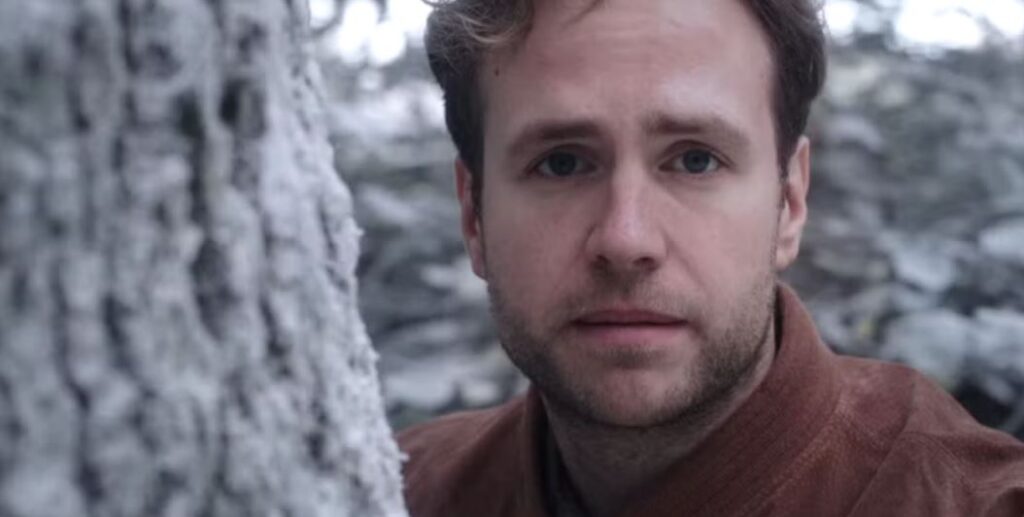
“Undeniably, ‘White Christmas’ has always been one of the best and most memorable episodes of Black Mirror. Over a decade after its release, ‘White Christmas’ feels even more harrowing and relatable because many of its storytelling devices and themes are starting to become real.” (Source: Screen Rant)
Black Mirror’s impact goes well beyond one episode. Other stories like “Be Right Back” and “Nosedive” have also materialised in daily life. In “Be Right Back”, the concept of bots mimicking the dead from their digital footprint is now active in the form of AI-powered chatbots designed to emulate deceased loved ones. The social scoring system of “Nosedive” is currently mirrored in social networks, from the number of Instagram followers to Uber rider scores, impacting users’ reputations, self-worth, and even access to opportunities.
“As shown in ‘Nosedive’, we also live in a world where everything from LinkedIn endorsements to Uber ratings, from Instagram followers to YouTube subscribers defines our social reputation.” (Source: Screen Rant)
Episodes like “Loch Henry” raised questions about the ethics of the true-crime genre, a concern that reflects modern criticism of real-life streaming and podcasting. Meanwhile, society faces the threat of AI embedding quietly into structures of power, labour, law, and entertainment, just as Black Mirror depicted years ago.
- Original Release Date: December 4, 2011 (Black Mirror), December 2014 (“White Christmas” special)
- Streaming Platform: Channel 4 (UK), Netflix (International)
- Main Cast: Jon Hamm, Rafe Spall, Cristin Milioti, Jimmi Simpson
- Showrunner: Charlie Brooker
- Genres: Drama, Mystery, Science Fiction, Thriller
- Creators & Directors: Owen Harris, Toby Haynes, James Hawes, and others
Critical Response and the Future of AI
“White Christmas” maintains an IMDB rating of 8.0 and is widely acknowledged as one of the most prophetic episodes of the show. As the technical world races to catch up with ideas that seemed absurdly dystopian a decade ago, Black Mirror’s warnings about AI, augmented reality, and social manipulation have shifted from fiction to cultural critique, and, increasingly, to lived reality.
“Black Mirror may not have always hit the mark with its projection of the future, but it sure got a lot of things right about AI and its imminent dangers.” (Source: Screen Rant)
As companies like Meta and Neuralink advance augmented reality, digital identity, and brain-computer interface technologies, questions of consent, sentience, criminal justice, and social ostracisation will become unavoidable. “White Christmas” now stands not just as a warning, but as a reference point for understanding the moral stakes of our technological choices.