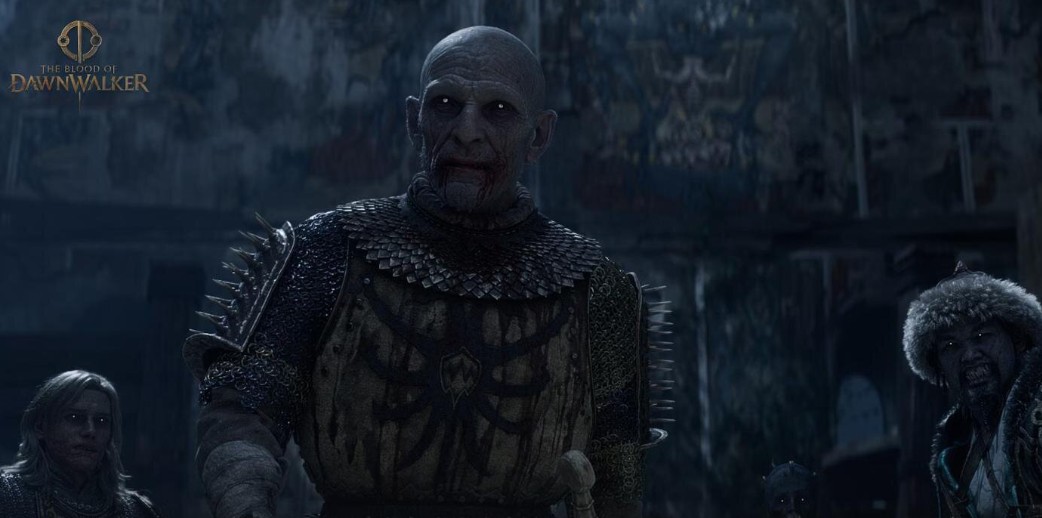
‘Delaying Next-Gen Consoles Is Easier for Us’: Blood of Dawnwalker Director on Industry Price Surge and Development Realities
July 15, 2026Konrad Tomaszkiewicz, director of The Blood of Dawnwalker and formerly The Witcher 3, says a delayed new console generation is “better for us”, as console prices hit record highs due to ongoing component shortages linked to generative AI datacentres.
With console prices rising instead of falling post-launch for the first time in industry history, game studios like Rebel Wolves are welcoming the prospect of a longer console cycle. The price for manufacturing next-generation hardware could soon reach unprecedented levels—rumours indicate Sony’s PlayStation 6 might cost as much as $1000 per unit to produce, while Microsoft’s Xbox division forecasts component costs doubling again in the coming year, threatening to disrupt its next-gen Project Helix plans.
Industry-Wide Price Shocks and Consequences for Game Makers
Console manufacturing costs and retail pricing have reached historic highs in 2026:
- PlayStation 6 potential build cost: $1000
- Xbox projects component prices to double by 2027
- Valve’s Steam Machine launched above projected retail due to market conditions
The root problem is component scarcity, driven primarily by generative AI datacentres outbidding consumer electronics for semiconductors and other critical parts. This has forced unprecedented price trajectories that leave new hardware launches financially perilous for both platform holders and game developers. As platform holders, including Sony and Microsoft, stall or suspend their generational roadmaps to wait for prices to stabilise, the likelihood grows for a protracted current-gen lifecycle.
For development studios, these delays have real operational implications. Konrad Tomaszkiewicz explained that a stable console generation simplifies game production logistics. “Because when you have the game and you know the systems and the features adjusted to these particular consoles, you know what you need to do,” he told Eurogamer. “Always, a new platform is a new challenge: you need to learn it, you need to know what are your borders, what you can do, what you cannot do. And also, it’s an additional build you need to create that you need to take care of later.”
Multiplatform Complexity: A Case Study in Blood of Dawnwalker
The Blood of Dawnwalker, launching September 3, 2026 for PlayStation 5, Xbox Series S/X and PC, is already split across four distinct builds: one each for PlayStation 5 and Xbox Series, and two for PC to address different regional ratings. Tomaszkiewicz contextualised the impact of multiple SKUs on post-launch support: “Let’s say we have four builds and later on you want to deliver a patch for the players. You need to be sure that these changes work on the Xbox, on the PlayStation, PC one and PC two.”
Introducing a next generation would only increase testing and logistical burdens. “When you have next-gen, you’re adding an additional two builds, and it multiplies the amount of work you need to do. It sounds easy but you need to know that there is a group of testers who need to test every platform separately—not only this particular change but whether the whole game has no blockers, if you can finish it from the beginning to the end, and so on and so on. It’s a huge effort, to be honest, and if we work on the consoles we have right now, it’s easier, because we know how many builds we have and it’s easier to manage.”
Visual Ambitions vs. Audience Realities in Next-Gen Transition
Longer console generations not only lower operational complexity for studios, they also maintain large install bases for publishers to target. The PlayStation 5 has surpassed 90 million units sold, meaning any new PlayStation would take years to match its potential audience. Exclusivity deals aside, cross-generational development remains the logical approach for publishers until a new machine reaches maturity.
For the sequel to The Blood of Dawnwalker, next-gen hardware is unlikely to disrupt core design, as Tomaszkiewicz notes: “It’s not really impacting the design. Of course it depends what you want to do, but from my perspective, it impacts mostly visuals, because when you have stronger tech, stronger hardware, you can do more stuff more easily, because you have more RAM, you have a better processor.”
He offered concrete examples of what the team could do with more robust technology: “We can, for example, try to fit more animations in the game, because we thought about the systems which Unreal delivers right now, like the emotion matching, but it’s quite expensive and we decided that we will not do it for this game. But for sure we’ll try to do it for the next game. And if you have stronger hardware, you can show more.”
Key Facts: The Blood of Dawnwalker
- Studio: Rebel Wolves
- Director: Konrad Tomaszkiewicz (previously The Witcher 3: Wild Hunt)
- Release Date: 3 September 2026
- Platforms: PlayStation 5, Xbox Series S/X, PC (with four distinct builds)
- Series Ambition: Future titles planned, including a sequel for next-generation consoles
The Blood of Dawnwalker features a unique day/night mechanic where protagonist Coen shifts between being a human by day and a vampire by night. Its gameplay centres on a freeform structure and dynamic time management, setting it apart from standard RPGs. Rebel Wolves has signalled its intention to build the franchise into a series, with future instalments likely targeting next-gen tech once viable.
The ongoing console pricing squeeze, driven by AI-driven component demand, has reshuffled priorities for game studios, pushing many to welcome a longer current-gen lifespan. For directors like Tomaszkiewicz, this means more predictable development cycles, more manageable testing, and the ability to capitalise on the largest possible audience, while eyeing ambitious technical features for the next era of hardware.