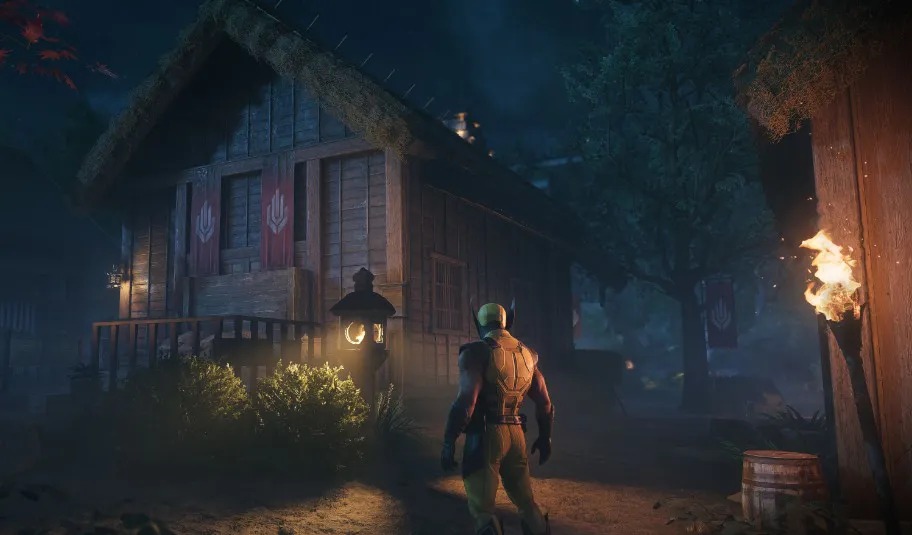
How Insomniac Used Japan Location Scanning for Marvel’s Wolverine
September 2, 2026Insomniac captured more than 600 scans in Japan for Marvel’s Wolverine, but the trip documents environment-art research—not a confirmed route through the game.
Insomniac Games’ Japan research trip for Marvel’s Wolverine offers a useful look at how a major game studio builds convincing places. It does not, however, reveal a playable route through Japan or confirm that every wall, station, temple or street photographed by the team will appear in the finished game.
The important distinction is between reference and replication. Insomniac says its artists gathered high-resolution scans and reference photography to study real materials, construction, wear, texture, shape and scale. That information can support fictional environments and reusable art components rather than exact digital copies of particular locations.
What the Japan trip confirms
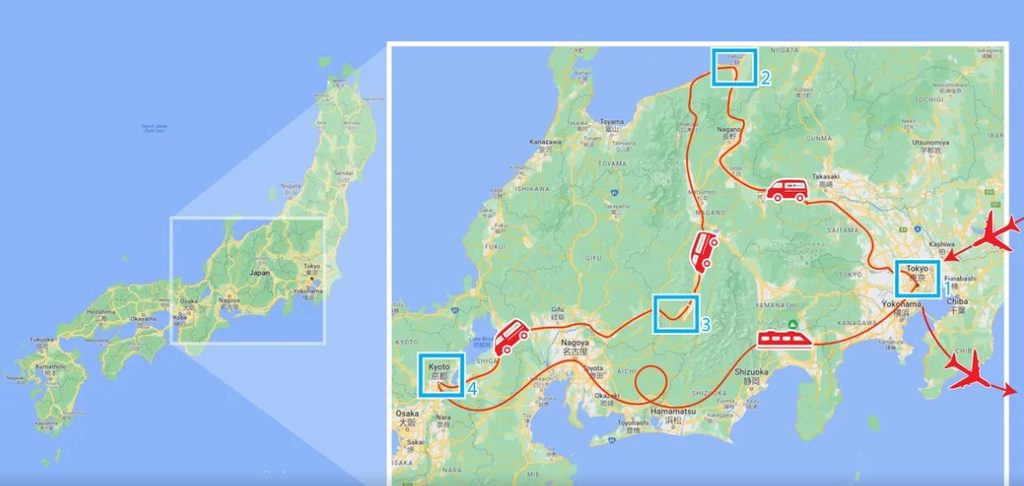
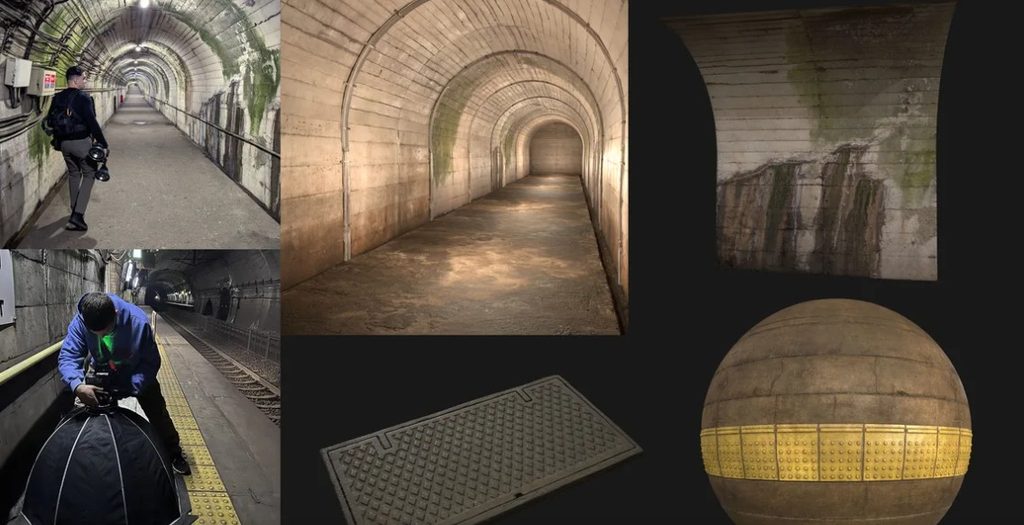
In an official PlayStation Blog account, Principal Technical Artist Nathaniel Bell says Insomniac sent team members to Japan early in production as part of a broader series of location-scanning trips.
The published route ran from Tokyo to Joetsu, then through Tsumago-juku and Magome-juku to Kyoto, before returning to Tokyo. The post does not disclose when the travel occurred. Before the trip, Insomniac’s environment team had already blocked out levels and assembled detailed requests for particular assets and biomes. Sony Interactive Entertainment teams in Japan assisted with virtual scouting and route planning.
That preparation matters because the trip was tied to identified production needs rather than presented simply as a search for recognizable landmarks. Requests for particular materials, vegetation, pavement, transit spaces or architectural features could guide the team toward references relevant to the environments under development.
Insomniac’s account describes a deliberately broad range of surroundings: snow-covered mountain regions, an underground train station, bamboo forests, sunbaked city streets and roadside temples. Across four biomes, the studio says the team captured more than 600 scans, walked more than 100 miles, collected 5.6 TB of data and took 189,589 photos, excluding additional reference photography.
How scanning becomes game-world art
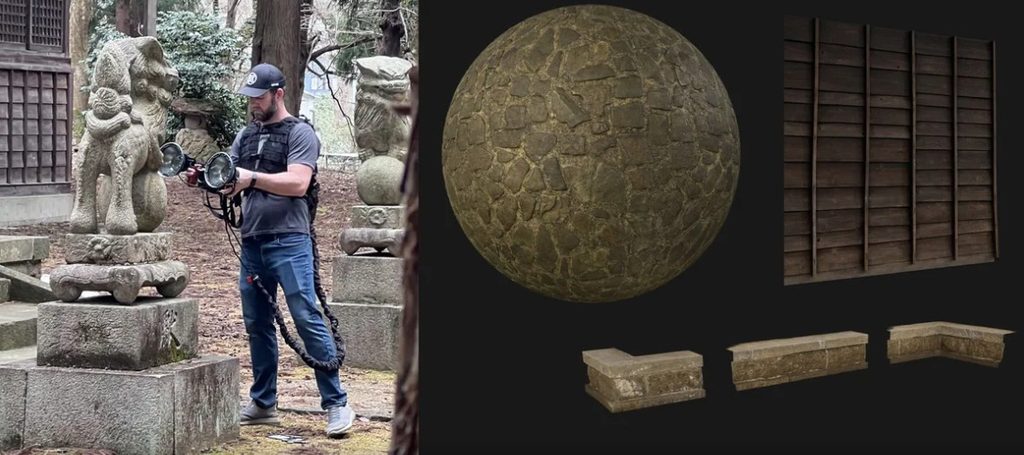
“Location scanning helps us create places that feel grounded and thoughtfully inspired rather than worlds pieced together from generic library assets,” Bell wrote in the official post.
The value of that reference is not necessarily limited to reproducing one object. Scans and photographs can help artists examine features such as the roughness of stone, layers of moss, the dimensions of a gate, joins in a wall or the way dirt gathers around a pavement edge. Those observations can inform the materials and shapes used elsewhere in an environment.
Insomniac’s examples illustrate that approach. The post describes scanning architecture to create modular art-asset kits and shows a Japanese wall transformed into a reusable scanned asset kit. Modular components can be arranged to suit a designed game space while retaining visual information drawn from real construction and surface detail.
That is why it would be too strong to call the trip a confirmed scan of the game’s map. Insomniac has confirmed scanning and photography, but it has not identified the capture hardware, software or processing pipeline. It is also safer not to label the work “photogrammetry,” because the developer has not specified that method.
What this means for Tokyo in Marvel’s Wolverine
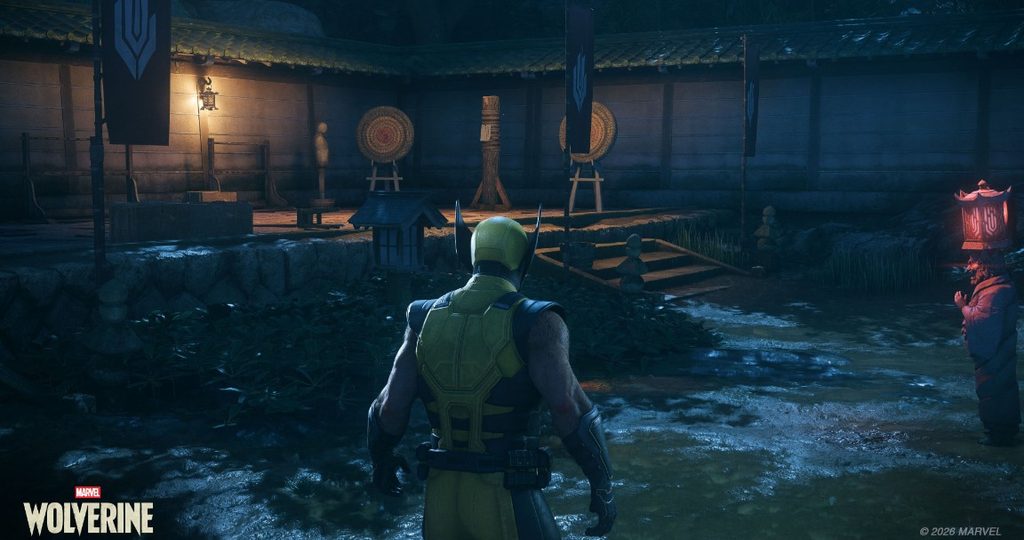
Tokyo is confirmed as one of the game’s settings. PlayStation’s official product page names the city alongside frozen Canadian wilderness and Madripoor, and describes Marvel’s Wolverine as a single-player narrative action-adventure.
Tokyo’s presence does not make the research itinerary the game’s playable geography. Neither the product page nor the Japan-trip report says Joetsu, Tsumago-juku, Magome-juku or Kyoto will appear as named locations. The sources also do not identify the scanned station, temples, bamboo areas or walls as final playable spaces.
That distinction is consistent with comments reported by Famitsu from creative director Marcus Smith. Famitsu’s interview frames the environments as a video-game expression intended to feel real without being geographically exact, rather than as a one-to-one recreation.
This approach allows real-world observations to inform an invented combat route, alley, mountain pass or interior without requiring the level to reproduce real geography. The available evidence supports a claim about authenticity-oriented environment design, not map-level accuracy.
The clearest takeaway
Insomniac’s Japan trip confirms substantial research for Marvel’s Wolverine’s environment art, not a checklist of final locations. The studio gathered scans and photographs after planning around level and biome needs, and its examples show how captured architecture can become reusable art for fictional settings.
Tokyo’s place in the game is official. The precise relationship between the research route and the final playable spaces is not. Unless Insomniac identifies individual sites or assets in the released game, the supported conclusion is that the journey was intended to help its environments feel observed and grounded rather than assembled from generic reference.
Source: PlayStation