After 24 Years, Pokémon Still Can’t Match Digimon Tamers’ Dark Storytelling Depth
December 29, 2025More than two decades since its debut, Digimon Tamers remains unmatched by the Pokémon anime in terms of complex themes, psychological depth, and willingness to explore darkness; even peripheral characters face moral extremes rarely seen in Pokémon’s franchise-safe storytelling.
Despite Pokémon’s status as a transmedia juggernaut, Digimon Tamers (2001-2002) is widely regarded by critics and fans as the franchise’s pinnacle, praised for its profound maturity and storytelling risks. Tamers distinguishes itself by examining themes such as mortality, trauma, and the ethical dilemmas of “monster taming,” while Pokémon chooses a consistently kid-friendly, accessible tone with much less dramatic consequence, an approach that, while commercially successful, leads to fewer high-stakes narratives.
Digimon Tamers: The Franchise’s Dark Masterpiece
Digimon Tamers originally aired from April 2001 to March 2002, spanning 51 episodes. Created by Akiyoshi Hongo and with series composition by Chiaki J. Konaka, Tamers set a new standard for narrative ambition in monster anime. “Digimon’s distinct advantage, especially in video games and anime, is its willingness to explore darker themes without talking down to its audience. This paved the way for Digimon Tamers, its undisputed masterpiece.”
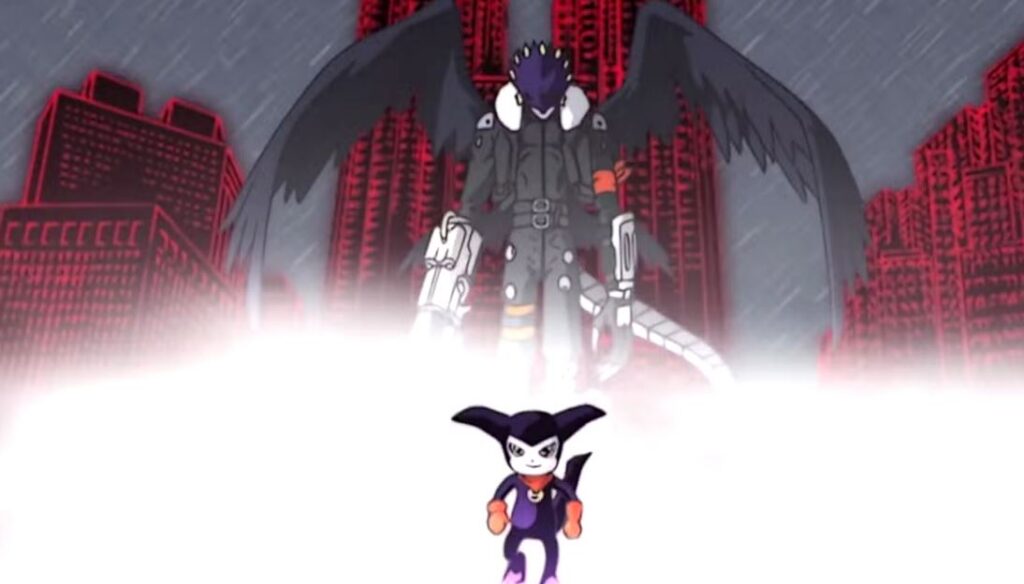
The series explores Faustian bargains and moral ambiguity on a scale Pokémon rarely touches. Notably, the complex arc of Impmon, a supporting character, throws Digimon’s typical morality into question. “Impmon, the initially obnoxious loner Digimon, felt mistreated by his former partners, Ai and Mako, striking off on his own in pursuit of power.
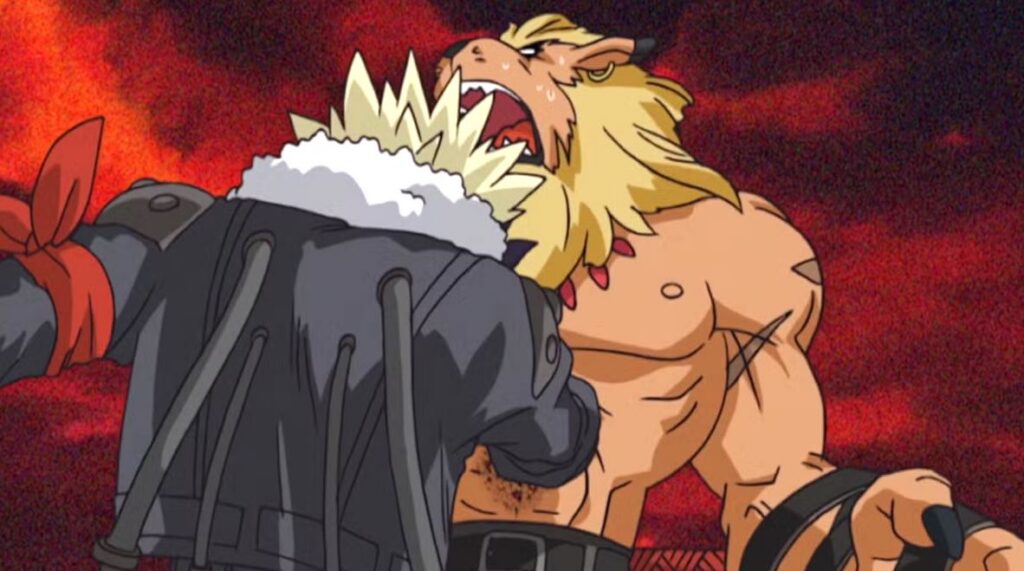
In exchange for his freedom, he effectively made a deal with the devil via the Deva Digimon Catsuramon in order to Digivolve. Suitably, his evolved form was the demonic Beelzemon (JP: Beelzebumon).” As Beelzemon, Impmon becomes an existential threat, killing the beloved Leomon and sending his child partner, Jeri Kato (Juri), into catatonia. “Despite all this, Beelzemon felt intense guilt after killing Leomon, whose partner was Jeri Kato (JP: Juri), left catatonic by the incident.” This is a permanent death, a rarity in Digimon and all but absent in Pokémon’s main anime, and cements Tamers’ status as a series willing to show irreversible consequences and explore redemption meaningfully.
Deconstructing the Human-Digimon Partnership
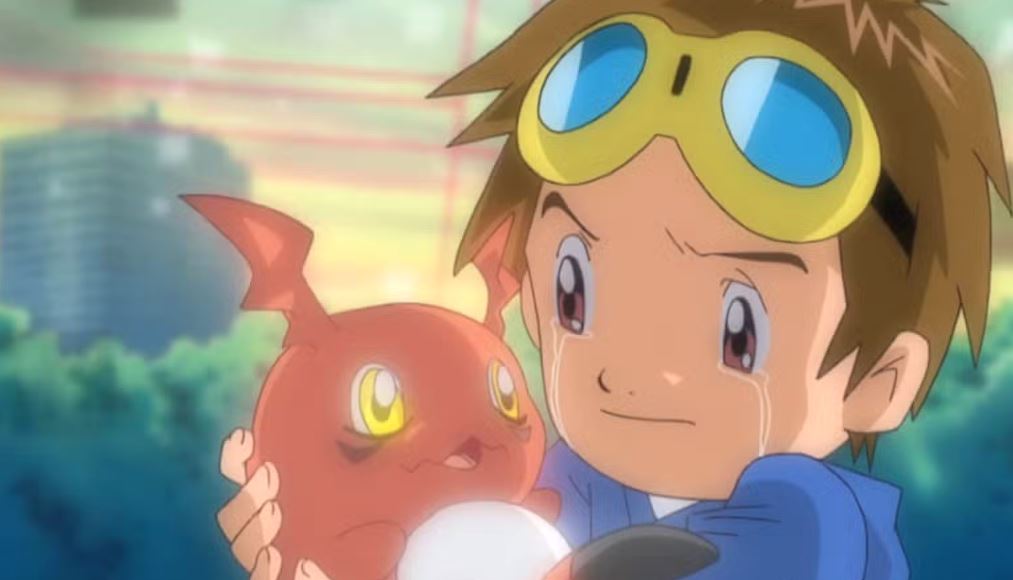
While Pokémon has occasionally glanced at trainer-pokémon friction, Digimon Tamers takes the idea further. Earlier Digimon series like Adventure (1999) explored a child protagonist, Tai, pushing his Agumon to dangerous limits, resulting in the monstrous SkullGreymon. But Tamers brings this dynamic to its psychological peak. In the pivotal episode #34, protagonist Takato Matsuki, reeling from Leomon’s death, pushes his beloved partner Guilmon to evolve in a fit of revenge, resulting in the uncontrollable Megidramon: “With Leomon having just been slain by Beelzemon, protagonist Takato Matsuki similarly pushed his partner, Guilmon (evolved into WarGrowlMon), to evolve out of malicious desire for vengeance. The result is Megidramon, a monstrous, serpentine beast no longer capable of speech.”
This scene marks one of the most traumatic moments in the series. “Takato’s regret over pushing Guilmon, his precious friend, with the intent to kill Beelzemon, leads him to realise he wants to be directly, literally alongside Guilmon in future fights. This results in their Biomerge Digivolution, where the two fused to create Gallantmon (Dukemon) and fight their greatest fights together.” Pokémon, meanwhile, efforts at depth, such as Ash’s troubled relationship with Charizard, generally resolve within an episode and avoid lasting psychological consequences or adult themes.
The D-Reaper: Anime’s Most Chilling Villain
Writer Chiaki J. Konaka’s influence is unmistakable in Tamers’ climactic villain, the D-Reaper. Rather than opting for a monstrous final opponent, Tamers introduces entropy itself, a rogue code spawned by the original Monster Makers’ hubris. “The D-Reaper is a rogue program, created by the Monster Makers, a group of adult programmers whose work from decades ago comes back to haunt them in the present. It juxtaposes darkly against their most wonderful creation, the Digital World.”
The D-Reaper’s masses engulf both digital and real worlds, a metaphor for psychological decay and despair.
The D-Reaper’s impact is most evident in its manipulation of Jeri Kato, exploiting her unresolved trauma from her mother’s death and her neglectful father. “Agents of the D-Reaper are remarkably cruel, particularly latching onto the catatonic Jeri after losing Leomon. Capitalising on her past trauma, where she lost her mother at a young age, pushed away her stepmother later on, and was callously neglected by her father, the final arc sees Jeri on a surreal journey akin to Shinji’s ego death in Evangelion.” The final battle with the D-Reaper is devoid of easy triumph. It’s a cathartic, emotionally dense conclusion where victory is hard-won and marked by psychological scars.
In sharp contrast, Pokémon’s major threats are usually resolved with the power of friendship and reset between episodes or arcs. While exceptions exist, the first feature film’s exploration of mortality and existentialism stands out; Pokémon remains structurally lighter, aiming for universal comfort over challenge.
Critical and Audience Ratings: Digimon vs Pokémon
- Digimon Tamers: TV-Y7, Animation/Action/Adventure, 2001-2002, starring Masako Nozawa (Narration) and Makoto Tsumura (Takato Matsuda). Creator: Akiyoshi Hongo. Audience Score: 9.5/10 (ScreenRant user aggregate).
- Pokémon: TV-Y7, Animation/Adventure/Anime/Fantasy, 1997-2023, starring Rica Matsumoto (Satoshi) and Ikue Otani (Pikachu). Studios: TV Tokyo et al. Audience Score: 9.5/10 (ScreenRant user aggregate).
Despite equal user scores, critical consensus positions Digimon Tamers as the more sophisticated narrative. Pokémon is unrivalled for accessibility and cultural impact, but Tamers consistently draws praise for its “brilliant fights, colourful creatures, and an overall uplifting message that’s safe for kids” while still “going places Pokémon, for all its longevity, simply never dared.”
Key Facts for Reference
- Digimon Tamers: Released 2001-2002, 51 episodes, creator Akiyoshi Hongo, composed by Chiaki J. Konaka.
- Main Story Arcs: Faustian bargains (Impmon/Beelzemon), psychological trauma (Takato/Megidramon, Jeri/D-Reaper).
- Main Villain: D-Reaper, a personification of entropy and despair.
- Pokémon’s Approach: Rarely features death or lasting trauma, prioritises all-ages accessibility.
Digimon Tamers is unanimously considered the franchise’s creative peak for its deep, dark exploration of character, consequence, and what it means to raise and fight alongside a partner—territory Pokémon, after 24 years, remains reluctant to fully explore.