Lucas Pope Avoids Sharing New Projects to Prevent Idea Theft and AI Copying
April 7, 2026Lucas Pope, acclaimed creator of ‘Papers, Please’ and ‘Return of the Obra Dinn’, says he no longer discloses details of his works in progress for fear they’ll be stolen or “slurped up by AI”, and expresses doubts about matching his previous success with future games.
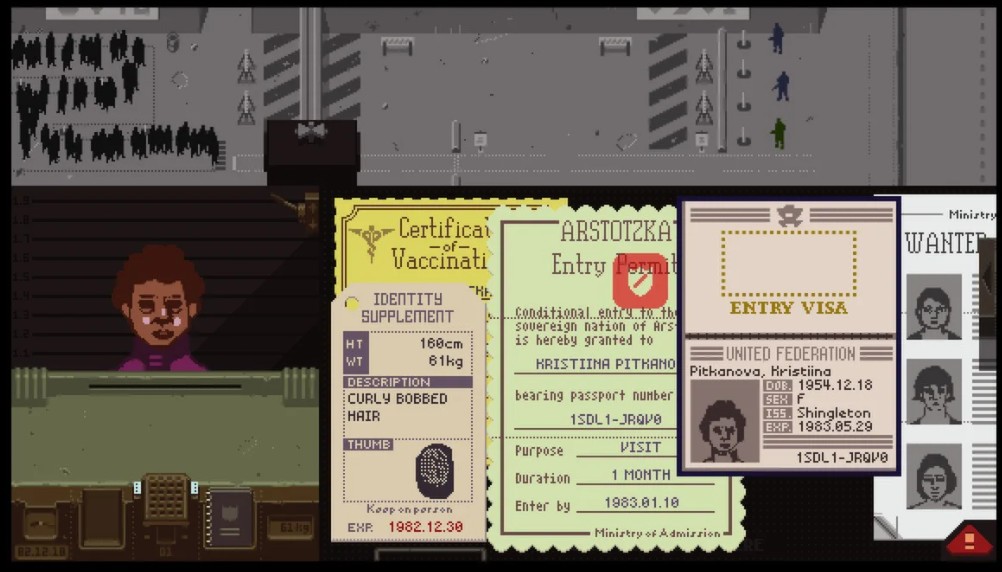
Lucas Pope, the developer renowned for independent hits ‘Papers, Please’ and ‘Return of the Obra Dinn’, has revealed on the ‘Mike & Rami Are Still Here’ podcast that he has stopped discussing his works in development, citing growing concerns about intellectual property theft and the rapid advancement of generative AI technology. Pope stated, “you don’t really talk about stuff when you’re working on it because I don’t know it’s going to get slurped up by AI or people are going to copy it or something else like that.”
The designer, celebrated for his genre-defying game mechanics and distinctive 1-bit art style in ‘Return of the Obra Dinn’, shared that his focus remains on solo development, creativity, and enjoying the process, rather than managing a team. Pope said, “I’m very production-focused in the sense that I want the production to work. I want it to be efficient. I want it to finish. I want to actually produce something at the end. But I also like to talk about the stuff I’m working on, and I think just now the situation kind of feels different to me.”
Pope’s Reluctance Rooted in AI Risks and Past Successes
Pope’s reluctance to publicise his projects isn’t solely about AI risk. He admits feeling pressure following the critical acclaim of his past games. He explained, “There’s also the sense that I was pretty happy with Obra Dinn and Papers, Please and I don’t… you know, maybe I can’t do it again, kind of thing. Do I really want to maybe just go out on a high note? Why drag myself down with the next thing that people may not like?”
Discussing the impact his earlier games have had on his motivation and output, Pope emphasised his desire to deliver something meaningful over simply capitalising on past recognition. “I feel lucky with those two games. You know, I can do the same things again. I can sort of focus on narrative and gameplay and mechanics and stuff like that, but who knows, it could be a total miss. And I don’t really want to push my luck too much in that sense.”
Pope underscored the dilemma faced by successful independent developers: balancing transparency in creation with safeguarding creative ideas. “It’s not a hard rule. It’s just, I got the kind of feeling about that, and I just didn’t feel as comfortable talking about the stuff I was working on again. So I hope that sort of breaks and I can feel comfortable talking about the stuff I’m working on.”
- Lucas Pope won multiple awards for ‘Papers, Please’ (2013) and ‘Return of the Obra Dinn’ (2018), including a BAFTA for Game Design.
- ‘Return of the Obra Dinn’ is recognised for its 1-bit art style reminiscent of early Macintosh computers.
- Pope works solo, handling programming, art, music, and design personally.
- Pope’s concern over idea theft includes both AI and human competitors.
Industry-Wide Pressures: Parallels and Perspectives
Rami Ismail, co-host of the podcast and co-founder of Vlambeer, contributed his perspective on the anxiety of following up a hit game. Reflecting on Vlambeer’s journey, Ismail said, “I remember when we did Ridiculous Fishing and it was the first big swing of my life where I was like ‘oh wow, wow, hey, good, I did it good.’ And then we had to do the next one and we were like ‘oh no’… I think a large part of that was because we were stuck with this feeling of like, ‘oh no, we did it good, now people’s expectations are high’.”
Pope responded, aligning with Ismail’s sentiment: “Yeah, that’s me. I’m just finding the fun over here. The last six years – just finding the fun.”
This candid exchange highlights a persistent struggle among acclaimed indie developers, balancing creative experimentation with the expectations set by previous success, all while adapting to an industry threatened by rapid advances in AI and risk of intellectual property appropriation.
Pope remains committed to the craft but less inclined to share early-stage projects until he feels the industry climate shifts towards greater creative safety. His approach is to continue developing games independently and carefully, focusing on quality over quantity.