Tomb Raider: Legacy of Atlantis Launches with AI Content Disclaimer, Crystal Dynamics Affirms Human-Crafted Final Game
June 4, 2026Tomb Raider: Legacy of Atlantis includes an AI-generated content disclaimer after its PlayStation State of Play trailer, with Crystal Dynamics assuring that all final game content is “human-crafted” despite the use of AI-assisted tools during development.
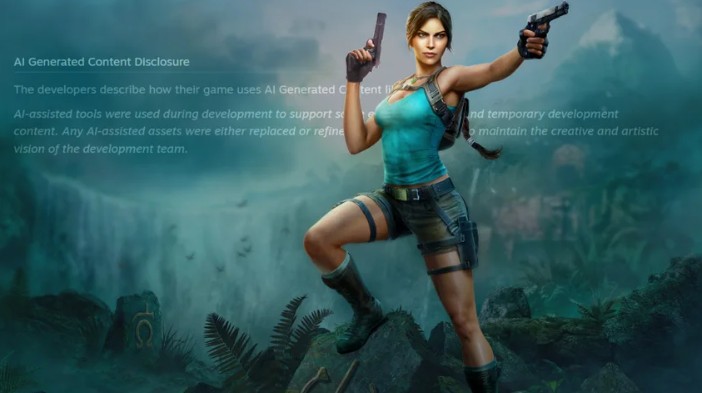
Tomb Raider: Legacy of Atlantis, the anticipated remake of the original Tomb Raider, surprised fans and industry observers by attaching a clear AI-generated content disclosure to its Steam page immediately following its official trailer reveal at the PlayStation State of Play. The notice explains that, “AI-assisted tools were used during development to support some early exploration and temporary development content. Any AI-assisted assets were either replaced or refined by humans in order to maintain the creative and artistic vision of the development team.”
A spokesperson for Crystal Dynamics addressed concerns and requests for clarification on the role of AI in Legacy of Atlantis, telling Eurogamer: “At Crystal Dynamics, we leverage AI tools to help our teams iterate on ideas faster and more efficiently, while ensuring that all finished content in the final product is human-crafted. Our goal is to empower the creativity and flexibility of our developers to deliver the highest-quality experiences for players everywhere.” This statement directly frames the AI usage as strictly supplementary to the developer-led process, with AI-generated materials used only in early or temporary stages and not in final shipped assets.
The game’s public AI disclaimer places it at the centre of the current debate over transparency in AI use for video game development. Disclosures like this are increasingly visible: for example, Crimson Desert by Pearl Abyss admitted to using “generative AI technology in a supplementary capacity during the creation of some 2D prop assets” but pledged that any AI-generated content would be replaced prior to launch. Despite this, some AI-generated artwork still remained in the released assets, drawing community criticism.
Epic Games CEO Tim Sweeney has commented on disclosure expectations, stating in November 2025: “The AI tag is relevant to art exhibits for authorship disclosure, and to digital content licensing marketplaces where buyers need to understand the rights situation. It makes no sense for game stores, where AI will be involved in nearly all future production.” Sweeney dismissed the need for further transparency, likening the demand for such disclosures to asking studios about their choice of shampoo.
Other prominent industry voices argue that mandatory AI disclosures matter. Konrad Tomaszkiewicz, the director behind The Witcher 3 and co-director of Cyberpunk 2077, stated that games “made with AI will have no soul,” while also conceding that some responsible uses of AI during development may be possible. Voice actress Ashly Burch, known for her role as Aloy, voiced support for integrating AI in controlled circumstances, but emphasised that it should never supplant human creativity.