
Capcom Clarifies Generative AI Policy: “A Certain Degree of Effectiveness,” Core Creativity Remains Human
June 7, 2026Capcom has confirmed it is integrating generative AI across all stages of its game development process to improve operational efficiency, but insists that human creativity remains central to delivering experiences that exceed player expectations.
Capcom, the Japanese studio behind hits like Resident Evil and this year’s acclaimed Pragmata, has clarified its generative AI policy following industry debate. The company stated, “Our policy is to improve the efficiency of routine operations so that our developers can devote more time to essential value creation.” Capcom identifies itself as actively “dabbling” with AI, using it as a support tool rather than for core creative decision-making.
In a recent investor Q&A, Capcom reiterated, “We believe that what games must deliver most is an experience that exceeds users’ expectations, and that the creativity at the core of such experiences should be handled by humans.” This policy differentiates Capcom from some studios that have fully embraced or rejected AI in development.
When questioned about how generative AI is being used, Capcom responded, “We are seeing a certain degree of effectiveness from the use of generative AI for improving operational efficiency. At present, we are actively incorporating it into each stage of the development process and are making concrete advancements to fully implement it for some parts of development.” Capcom adds that the “game development process is multifaceted and complex,” and cautions, “it will take some time before we can quantitatively demonstrate the results of this improved development efficiency.”
Industry Adoption and Debate on AI in Game Development

Generative AI adoption is intensifying across the games industry, with a marked increase in the last two years. According to a 2024 Unity report, 62 percent of studios using Unity’s tools utilised AI at some stage during game production. Animation was cited as the primary application. The Game Developers Conference (GDC) survey that same year found that roughly one third of industry workers had already used AI tools. By 2025, that figure is expected to be higher, and a Tokyo Game Show survey reported that over half of Japanese game studios are now using AI in development.
AI’s growing ubiquity prompted Epic Games CEO Tim Sweeney to remark it “made ‘no sense’ for studios to disclose AI use any more,” comparing such disclosures to sharing information about “what kind of shampoo they use.” However, criticism remains within the industry. Konrad Tomaszkiewicz, director of The Witcher 3 and co-director on Cyberpunk 2077, stated, “Games made with AI will have no soul,” but conceded there are productive uses of AI in development workflows. Ashly Burch, the actress known for voicing Aloy, acknowledges AI’s utility but maintains it “should never replace human creativity.”
Capcom’s 2026 Successes and AI’s Role
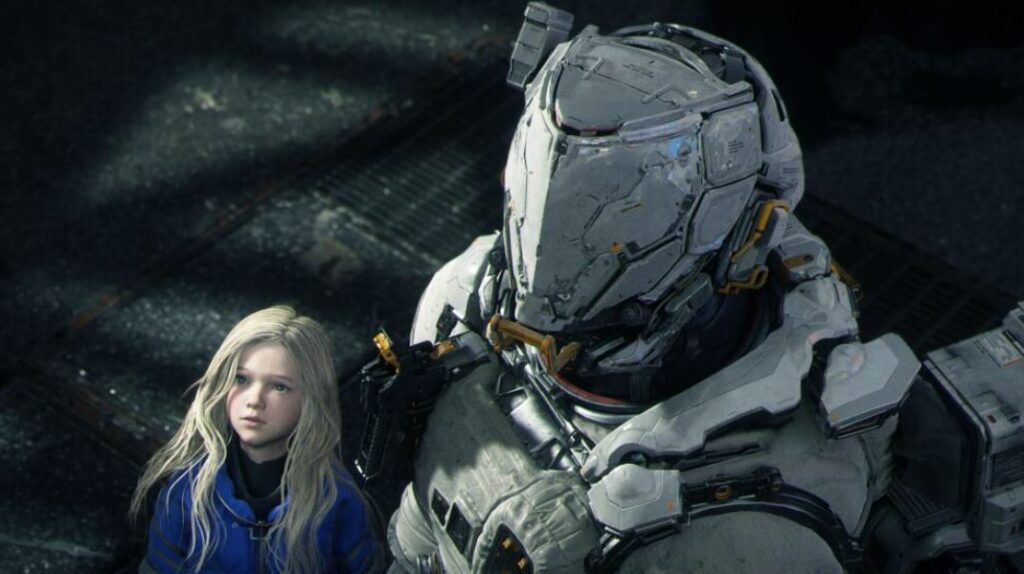
Capcom’s nuanced approach to AI coincides with its most successful year to date. Pragmata, released in February 2026 after numerous delays, received broad critical acclaim and sold 1 million copies within two days, later reaching 2 million. Resident Evil Requiem, also released in February, rapidly became the fastest-selling entry in the more than 30-year history of the franchise, surpassing 7 million copies sold by April.
These achievements underline Capcom’s central point: while AI supports increased efficiency behind the scenes, the studio attributes its critically and commercially successful releases to the “creativity at the core” managed by its developers. Capcom has made it clear, “the creativity at the core of such experiences should be handled by humans,” with generative AI strictly relegated to improving operational efficiency, not replacing human-led vision or design.
Key Facts:
- Capcom uses generative AI to “improve the efficiency of routine operations so that our developers can devote more time to essential value creation”.
- “We believe that what games must deliver most is an experience that exceeds users’ expectations, and that the creativity at the core of such experiences should be handled by humans.” – Capcom, investor Q&A, June 2026
- “We are seeing a certain degree of effectiveness from the use of generative AI for improving operational efficiency. At present, we are actively incorporating it into each stage of the development process.”
- In 2024, Unity reported that 62% of studios using its tools used AI in some capacity during game development, with animation as the top use case.
- A 2024 GDC survey found about one third of industry workers had used AI tools; a Tokyo Game Show survey in 2025 indicated over half of Japanese game companies do the same.
- Epic Games’ Tim Sweeney stated that disclosing AI tool usage “made no sense” due to its pervasiveness.
- Pragmata sold 1 million copies in two days, rising to 2 million, while Resident Evil Requiem sold over 7 million within two months, becoming the fastest-selling entry in the series.