The Witcher 3: Songs of the Past Expansion Has a Larger Dev Team Than the Original Game, Led by Fool’s Theory
June 2, 2026CD Projekt Red confirms that approximately 190 developers are working on The Witcher 3’s new expansion Songs of the Past, exceeding the core team size of the original game, with the majority at co-developer Fool’s Theory and only a minimal direct team at CD Projekt Red itself.
The expansion Songs of the Past for The Witcher 3: Wild Hunt is currently in an advanced production phase and is being developed by a core team that rivals, or even surpasses, the original game’s staff numbers. In a June 2026 financial call, CD Projekt Red stated that around 190 developers are active on the expansion, the vast majority employed by Fool’s Theory, which also includes numerous ex-CD Projekt Red staff.
Game director Konrad Tomaskiewicz clarified in direct comment that the original Witcher 3 development team averaged 160 developers, with the figure spiking to ~205 in the final months ahead of launch due to resource sharing with the Cyberpunk 2077 team. For an expansion attached to an 11-year-old game, such a development commitment from both CD Projekt Red and Fool’s Theory is exceptional. As Tomaskiewicz told Eurogamer:
“The Witcher 3 team averaged 160 developers, only jumping to around 205 when the Cyberpunk 2077 team joined closer to launch.”
Team Distribution: CD Projekt Red and Fool’s Theory
During the Q1 2026 financial call, CD Projekt Red joint CEO Michał Nowakowski provided detailed team breakdowns, with the following statement specifically regarding Songs of the Past:
“I can share that the expansion is now in an advanced phase of production. Around 190 developers, most of them from our trusted partners at Fool’s Theory, are currently working with us on the project. At the same time, CD Projekt Red provides the creative oversight to safeguard the quality of the Witcher experience.”
A team allocation slide from the report (dated 30 April 2026) explicitly demonstrates where internal CD Projekt Red personnel are focused:
- 513 developers – The Witcher 4
- 163 developers – Cyberpunk 2
- 83 developers – Project “Sirius”
- 24 developers – Project “Hadar”
- 173 developers – Shared Services (localisation, QA, data, motion capture, insights, and experience)
- 19 developers – “Other” (including Songs of the Past)
Given that Songs of the Past is not Sirius or Hadar, and Shared Services refers to company-wide support, the only likely CD Projekt Red allocation for active development is the “Other” category, meaning the direct CDPR team on Songs of the Past stands at a maximum of 19 full-time developers.
The marked split between CD Projekt Red and Fool’s Theory means core development is housed externally, though Fool’s Theory’s staff comprises several former CD Projekt Red developers, which maintains continuity in creative vision. CD Projekt Red retains significant creative supervision but acts in a primarily oversight and consultative role.
Expansion Scope, Setting, and Technical Changes
The scale of Songs of the Past is further indicated by repeated comparisons, both in calls and promotional streams, to Blood and Wine, the critically acclaimed Witcher 3 expansion famous for its new setting, Toussaint. Laura Beitzel, CD Projekt Red senior community and social media manager, stated during a recent livestream:
“Songs of the Past will be aligned with what you’re familiar with in Blood and Wine, and what you’ve come to experience and expect from us when we do our expansions.”
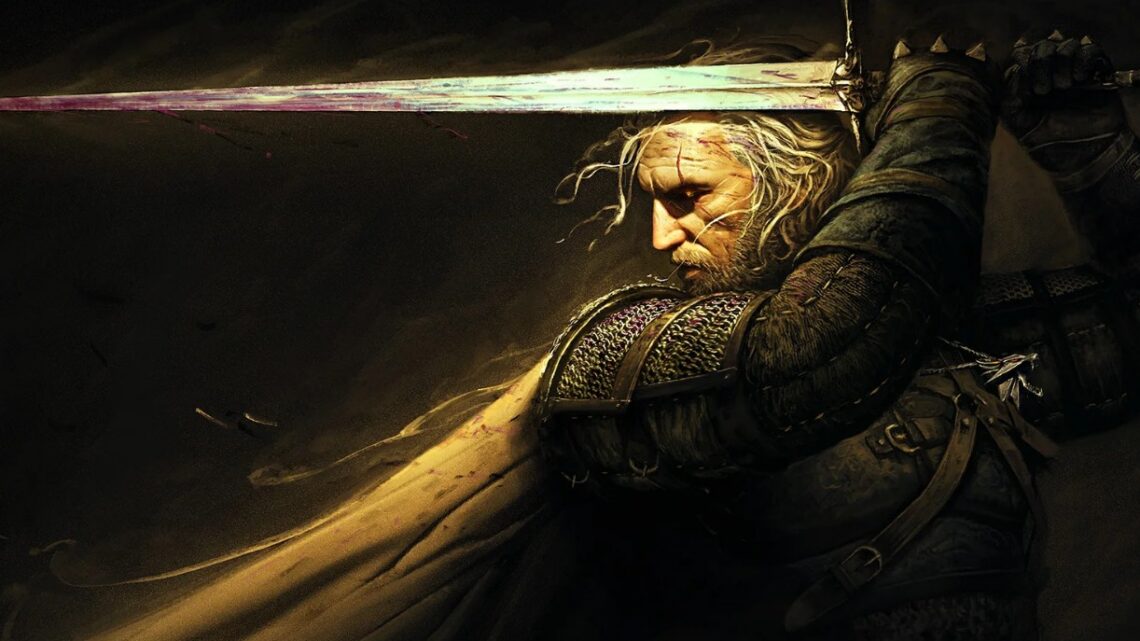
This comparison implies the expansion will introduce a substantial new region for players to explore, mirroring Blood and Wine’s overhaul. The most prominent fan theory places the setting in Cidaris, a city-region to the west of Temeria and near Skellige. The link is partially driven by the design of Geralt’s sword in the expansion’s key artwork, which matches iconography associated with Cidaris.
In anticipation of more demanding visuals, CD Projekt Red has increased the minimum PC requirements for The Witcher 3 with Songs of the Past: support for HDDs and versions of Windows prior to Windows 11 has been discontinued, suggesting a significant boost in graphics or world complexity.
Additional details confirmed to date include:
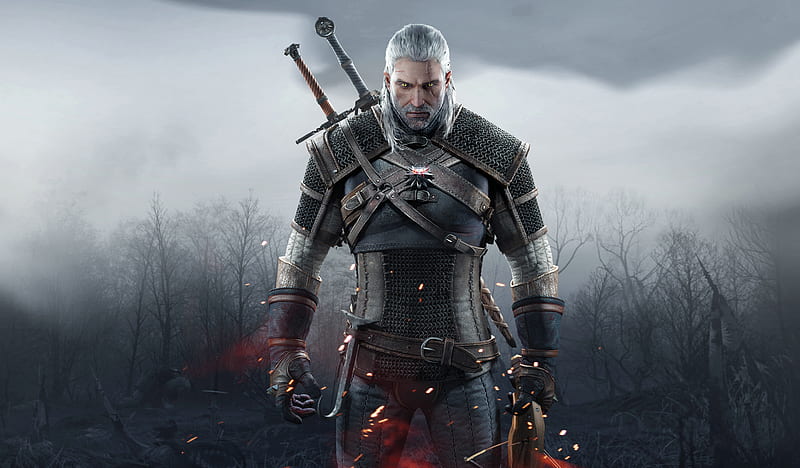
- Main Character: Geralt of Rivia will headline the expansion, not Ciri. Witcher 4, currently in development, will focus on Ciri.
- Timeline: Unconfirmed. While the title ‘Songs of the Past’ hints at a prequel or flashback-driven story, official word from CD Projekt Red is pending. Ciri’s involvement, if any, is also unconfirmed at this stage.
- Release Date: Awaiting official announcement; more is expected later in Summer 2026.
Development Summary: Fact Block
- Total devs on expansion: ~190 (mostly Fool’s Theory)
- Original Witcher 3 team (avg): 160, peaking at 205 before launch
- CD Projekt Red direct devs on expansion: Up to 19
- Main setting rumour: Cidaris
- Graphical/technical changes: No HDD support, Windows 11 required
The unprecedented size of the Songs of the Past development team, spearheaded by Fool’s Theory under CD Projekt Red’s creative oversight, signals an expansion designed as a true successor to Blood and Wine, potentially the largest post-launch content ever developed for a game of Witcher 3’s age. Expect more details, including release window and story setting, later this summer.